Paul Klee (1879–1940)
A painter who thought in color and drew like a child — but with the precision of a master. His work balances spontaneity with system, whimsy with rigorous inquiry. Bauhaus teacher, color theorist, and creator of worlds that exist only in paint.
Featured Artwork
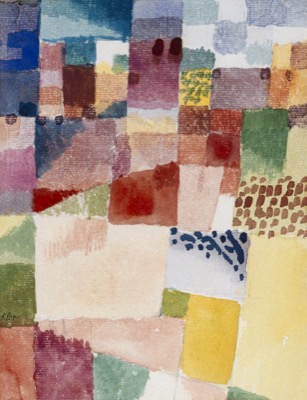
Motif from Hammamet
1914 · Watercolor on paper
Try in Framesie
Visit framesie.com on a larger screen.
Life and Work
Paul Klee (1879–1940) was a Swiss-German painter whose singular vision defies easy classification. Son of a music teacher, he nearly became a violinist before choosing visual art. He studied in Munich, traveled to Italy, and in 1914 took a transformative trip to Tunisia with August Macke and Louis Moilliet. There, surrounded by North African light, he wrote: "Color and I are one. I am a painter."
From 1921 to 1931, Klee taught at the Bauhaus in Weimar and Dessau, developing his theories of color, line, and form. When the Nazis branded his work "degenerate" in 1933, he returned to Switzerland, where he spent his final years producing thousands of works despite declining health.
Style and Themes
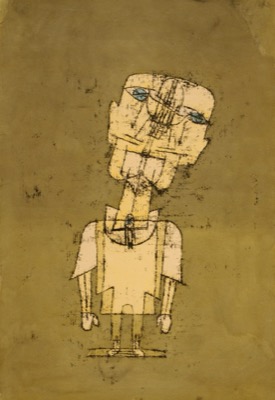
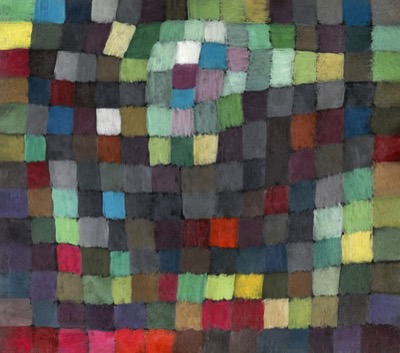
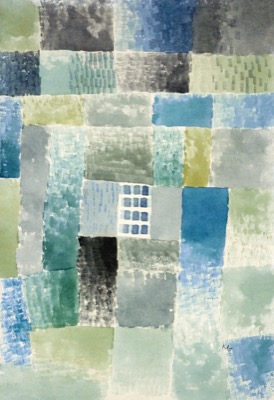
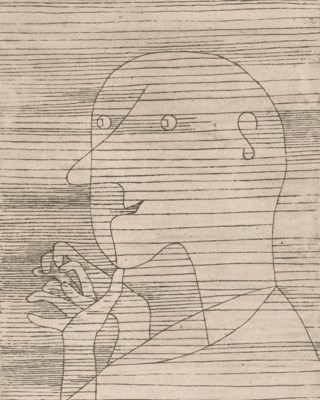
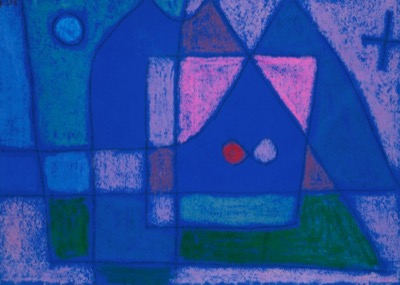
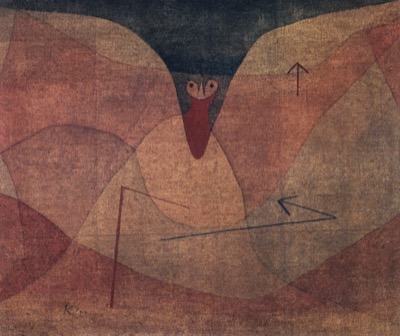
Klee's work hovers between abstraction and representation, between childlike simplicity and sophisticated theory. His "Magic Squares" reduce landscape to pure color relationships. His figures — ghosts, angels, birds — exist in their own logic. He worked across mediums: oil, watercolor, etching, drawing. Each piece feels like a private language made visible.
A line is a dot that went for a walk.
Paul Klee
His influence extends through modern art, children's book illustration, and graphic design. Klee prints bring intellectual playfulness to any space. Sophisticated enough for serious collectors, accessible enough for everyday living.
Size your own art.
Upload any image to find every size it can print at gallery-quality resolution. Crop, export, and it's ready for the printer.
Free to use. Private by design. No account required.
Try your image
→
Visit framesie.com on a larger screen.