
What You See
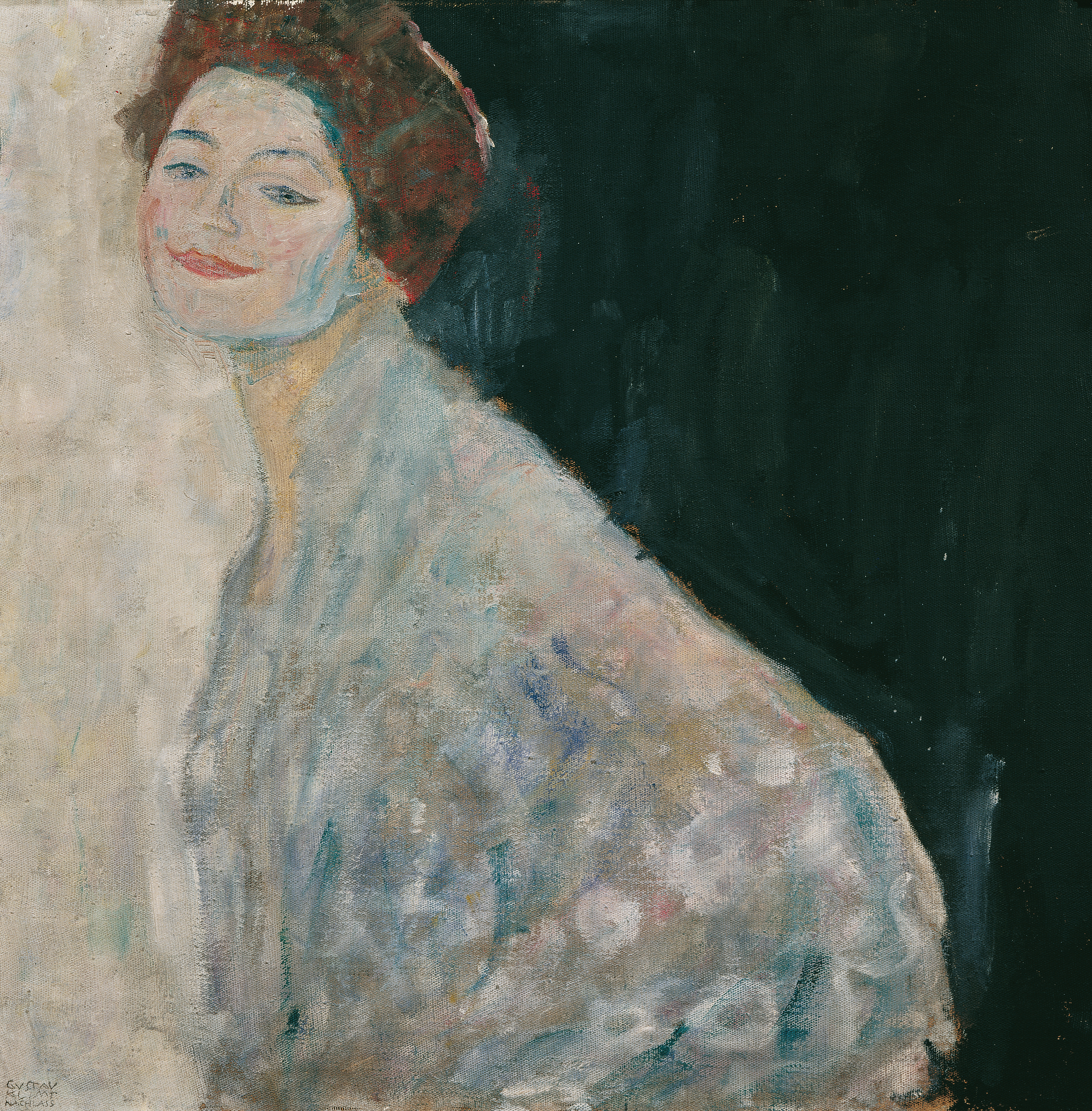
A woman smiles broadly against a dark green background, her white dress loose and unfinished. The face is fully rendered — rosy cheeks, warm gaze — but the body dissolves into sketchy brushwork. You can trace Klimt's process: face first, with delicate modeling, then surrounding forms blocked in but not resolved. The smile is striking — unusual in his painted portraits, though common in his drawings.
Context
Painted 1917–1918, now at the Belvedere in Vienna. This appears to be an idealized, fictional portrait rather than a commission — Klimt granted himself greater freedom in rendering the model's features. Unlike his formal commissioned work, where sitters appear composed to the point of remoteness, the woman here radiates genuine warmth.
Story
Left unfinished on Klimt's easel when he suffered a fatal stroke in January 1918. The Belvedere displays it exactly as he left it, a rare glimpse behind the curtain. Vienna chose not to have it "completed" by another hand.
For Your Space
The genuine smile is unusual for formal portraiture, warm rather than posed. Works well in a personal space like a bedroom or study. The square format and soft palette are easy to place, and the unfinished quality adds intimacy.