
What You See
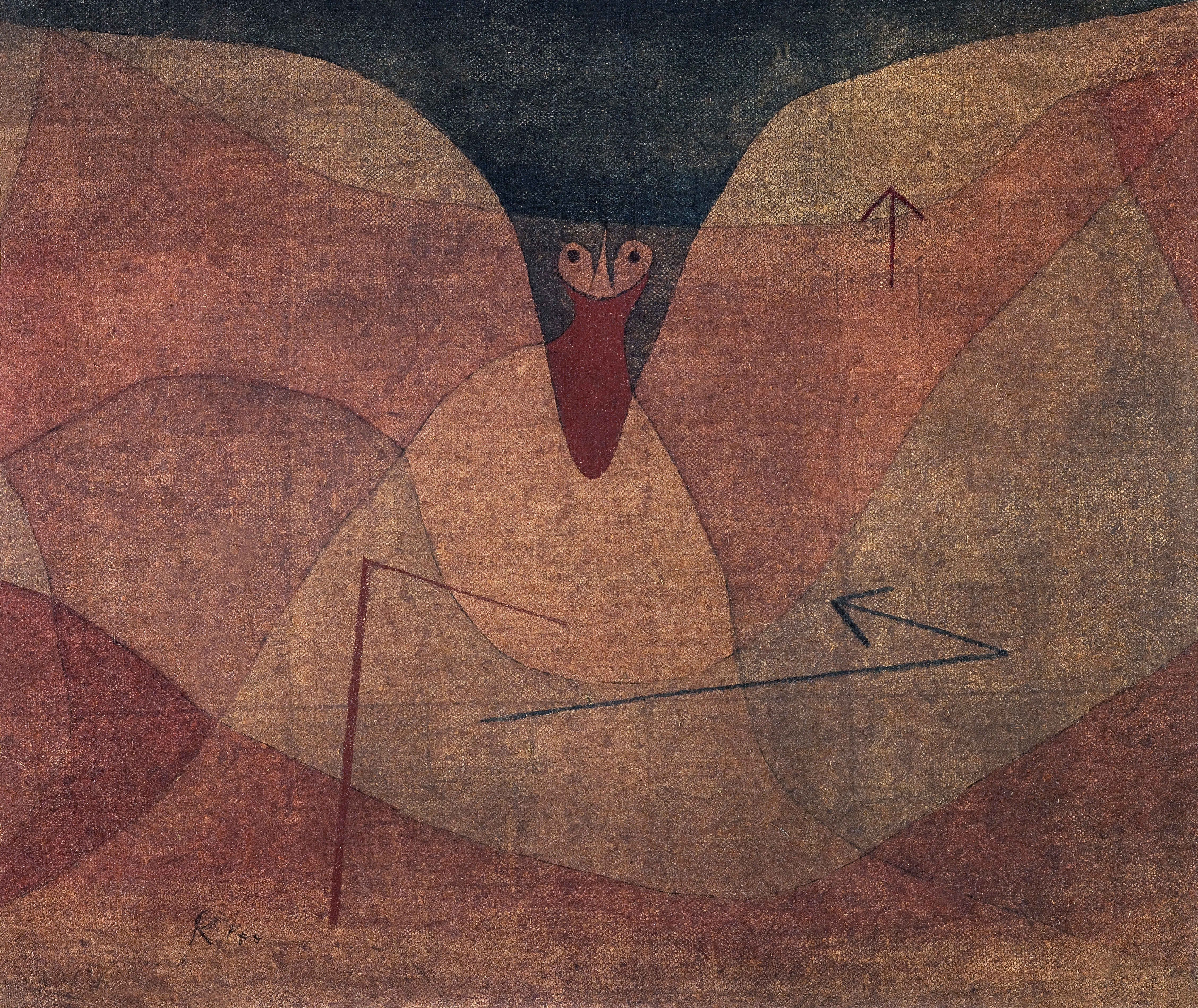
A bird, or the idea of a bird, emerges from overlapping curves of earth tone. The head is a dark triangle with two red eyes; the body flows outward in waves of terracotta, rust, and pale rose. Arrows point upward and outward, suggesting flight, direction, evolution. Klee used thin, translucent washes of oil — what he called "veils of color" — building texture like burlap or sand. Warm and grounded despite the subject of flight.
Context
1934, created during Klee's final decade. He associated birds with freedom and transcendence — creatures unburdened by earthly weight, almost angelic. The title hints at Darwin but the image feels mystical rather than scientific. The arrows suggest transformation, progress, perhaps escape. A year earlier, Klee had fled Nazi Germany. Flight was more than metaphor. The piece balances what critics call Klee's signature tension: childlike spontaneity meeting rigorous formal inquiry.
For Your Space
The warm earth tones make this unexpectedly cozy — autumnal, grounded. The square format is versatile. Works well in spaces where you want warmth without intensity: dining rooms, entryways, creative studios. The bird subject adds life without being literal.